





 Dubai
Dubai  Abu Dhabi
  Kathmandu
  Singapore
  United Arab Emirates
  Nepal
Nepal  Singapore
  Sightseeing Cruise
  Dinner Cruise
  Dhow Cruise
  Dubai Marina Night Cruise
  Theme Parks
  City Tours
  Dubai Tour Package
  New Year Eve Cruise
 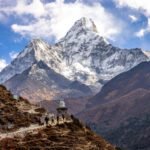 Trekking Adventures
  Snow Park
  Singapore Tour Package













Everest Base Camp: The Complete Guide — Trek & Helicopter Tour (2026)
Everything you need to know about Everest Base Camp — altitude, route, cost, best time to visit, and whether to trek 14 days or fly by helicopter in 4 hours. Updated March 2026.
What Is Everest Base Camp?
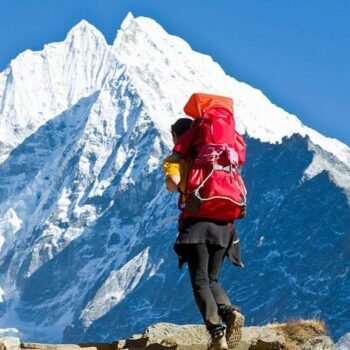
Everest Base Camp (EBC) is the staging point for all expeditions attempting the South Col route to the summit of Mount Everest — the world's highest mountain at 8,848.86 metres (29,031.7 ft). Located in the Khumbu region of northeastern Nepal inside Sagarmatha National Park, South Base Camp sits at an altitude of 5,364 metres (17,598 ft) above sea level, at the foot of the Khumbu Icefall.
Known locally as Sagarmatha (Sanskrit: सगरमाथा) in Nepali and Chomolungma (ཇོ་མོ་གླང་མ) in Tibetan, Everest Base Camp draws tens of thousands of trekkers and hundreds of expedition teams every year. It is one of the most iconic trekking destinations on Earth — a pilgrimage for adventure travelers, mountaineers, and anyone who has ever stared at a map and dared to dream.
There are two base camps on Everest: South Base Camp (Nepal, 5,364m) — the one nearly all trekkers visit and the starting point for the classic South Col route — and North Base Camp (Tibet, 5,150m), accessible from the Tibetan side and currently restricted to permit holders only. All tours and treks on Inticketo access South Base Camp from Kathmandu, Nepal.
Trek vs Helicopter — Which Is Right for You?
Two completely different ways to experience Everest Base Camp. Both are operated by Inticketo with licensed, experienced Nepali teams. The right choice depends entirely on your time, fitness level, budget, and what kind of experience you're after.
| Factor | 🥾 14-Day EBC Trek | 🚁 Helicopter Tour (4 hrs) |
|---|---|---|
| Duration | 14 days from Kathmandu | 4 hours, back before lunch |
| Starting Price | From AED 5,449 per person | From AED 4,999 per person |
| Fitness Required | Moderate–High (daily 5–8 hr hikes) | No fitness required |
| Altitude Reached | 5,555m (Kala Patthar) + 5,364m (EBC) | 5,364m (Everest Base Camp) |
| Experience | Full Sherpa culture, villages, landscapes | Aerial views of Everest + 14 Himalayan peaks |
| Included Meals | 33 meals (B/L/D throughout) | Breakfast at World's Highest Hotel (3,880m) |
| Best For | Adventure seekers Bucket listers | Limited time Older travelers Families |
| Group Size | Small groups (max 12) | Private helicopter (up to 5 pax) |
| Reviews | ⭐ 4.8 / 5 — 104 reviews | ⭐ 4.9 / 5 — 86 reviews |
| Confirmation | Instant | Instant |
Choose Your Everest Base Camp Experience
Both experiences are available year-round and can be booked instantly. No hidden fees. Direct pricing with licensed operators.
- Stand at Everest Base Camp (5,364m) & Kala Patthar (5,555m)
- Flights, licensed guide, meals & permits included
- Daily health monitoring with pulse oximeter
- Small groups — max 12 trekkers
- Instant confirmation · Free cancellation
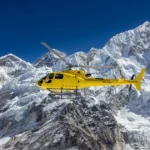
- Fly over Khumbu Glacier & Everest Base Camp
- Breakfast at world's highest hotel (3,880m)
- See 14 Himalayan giants — Everest, Lhotse & more
- Safest certified Himalayan helicopter operators
- No fitness required · All ages welcome
Everest Base Camp Trek Route — Key Stops & Altitudes
The standard South Base Camp trekking route begins and ends in Kathmandu. All trekkers fly into Lukla (2,840m) and follow the Dudh Koshi Valley northward through a chain of Sherpa villages, monasteries, and increasingly dramatic mountain scenery before reaching Base Camp on Day 9.
Kathmandu — Fly to Lukla
1,400m → 2,840mArrive in Kathmandu, pre-trek briefing. Early morning flight to Tenzing-Hillary Airport, Lukla — rated one of the world's most thrilling short-haul flights.
Phakding
2,610mFirst day on the trail. Pine forests, suspension bridges over the Dudh Koshi River, mani walls carved with Buddhist prayers.
Namche Bazaar — The Sherpa Capital
3,440mGateway to the high Khumbu. First view of Everest above the valley rim. Mandatory 2-night acclimatization stop. Saturday market, bakeries, expedition outfitters.
Tengboche
3,860mThe largest monastery in the Khumbu. Ama Dablam (6,812m) towers behind the ancient golden roof. Evening puja ceremony attended by visiting trekkers.
Dingboche & Lobuche
4,410m → 4,940mHigh-altitude villages. Yak pastures. The Khumbu Glacier begins to dominate the landscape. A second acclimatization day at Dingboche before pushing higher.
Gorakshep
5,164mLast permanent settlement before Base Camp. Tea houses at extreme altitude. Most trekkers stay 2 nights for both Base Camp and Kala Patthar hikes.
Everest Base Camp
5,364mThe destination. The Khumbu Icefall towers directly ahead. Prayer flags mark the site used by Everest expeditions. The view of the Lhotse Face and Western Cwm is unlike anywhere on Earth.
Kala Patthar — Sunrise Viewpoint
5,555mThe highest point on the standard EBC route. The pre-dawn climb rewards trekkers with the most photographed view of Everest on the planet — full face, at sunrise, in golden hour light.
Helicopter Route: The helicopter tour departs from Kathmandu (1,400m), flies directly to Kala Patthar Landing (5,545m) and Everest Base Camp (5,364m) with a breakfast stop at Syangboche / Everest View Hotel (3,880m) — the world's highest-altitude hotel. Total flight time: 4 hours including stops. Back in Kathmandu by midday.
All Camps on Mount Everest — From Base Camp to the Summit
Mount Everest's South Col route uses five established camps. Trekkers on guided packages visit Base Camp (5,364m). Mountaineers on summit expeditions continue through Camps 1 through 4 before making their final summit push.
Everest Base Camp (EBC)
Accessible to trekkers on guided packages. The Khumbu Icefall begins directly above. Used by all South Col expeditions as the main staging, communications, and medical hub.
Advanced Base Camp
Reached after crossing the Khumbu Icefall — a treacherous zone of shifting seracs and crevasses crossed only by permitted expedition climbers. Not accessible to trekkers.
Advanced Base Camp (Upper)
Located in the Western Cwm — a relatively flat glacial valley at high altitude. Teams acclimatize here before moving to Camp 3 on the Lhotse Face.
Lhotse Face Camp
Carved into the steep 50-degree ice face of Lhotse. Considered one of the most technically demanding sections of the entire South Col route due to high winds and exposure.
The South Col — Death Zone Entry
The final camp before summit day. The South Col is a wind-blasted saddle between Everest and Lhotse. Climbers depart from Camp 4 at midnight for the summit push, typically reaching the top at dawn.
Mount Everest Summit
The highest point on Earth, first summited by Tenzing Norgay and Sir Edmund Hillary on 29 May 1953. Approximately 300–500 climbers reach the summit each year during the two summit windows.
Best Time to Visit Everest Base Camp
There are two main trekking seasons for Everest Base Camp. Both the helicopter tour and the 14-day trek operate year-round, but the pre-monsoon spring season (March–May) and post-monsoon autumn season (September–November) offer the clearest skies, most stable weather, and the best mountain views.
Spring: March – May
Clear skies, warming temperatures, rhododendrons in bloom. Peak trekking season. Lukla flights from Manthali/Ramechhap during high demand periods. Book 2–3 months ahead.
Autumn: September – November
Post-monsoon clarity, crisp air, crystal-clear views. October is considered the single best month for both trekking and helicopter tours. Busiest season for booking.
Winter: December – February
Cold (-20°C nights at altitude), fewer trekkers, cheaper prices. Helicopter tours still operate. High-altitude passes can be snowed in. Requires proper cold-weather gear.
Monsoon: June – August
Heavy rainfall, cloud-covered peaks, leeches on trail, high landslide risk. Helicopter tours are weather-dependent and frequently cancelled. Not recommended for first-time visitors.
Permits & Entry Requirements for Everest Base Camp
All trekkers and helicopter tour passengers must hold valid Nepal entry permits plus the following trekking-specific permits. All permits are included in the price of both Inticketo packages — you do not need to arrange anything separately.
| Permit | Cost (approximate) | Where Obtained | Included in Package? |
|---|---|---|---|
| Nepal Entry Visa | USD 30 (15 days) / USD 50 (30 days) | On arrival at KTM Airport (bring USD cash) | ❌ Not included — obtain on arrival |
| Sagarmatha National Park Entry | NPR 3,000 (~USD 22) | Monjo checkpoint on trail | ✅ Included in both packages |
| TIMS Card | USD 10–20 | Nepal Tourism Board, Kathmandu | ✅ Included in both packages |
| Pasang Lhamu Municipality Permit | NPR 2,000 (~USD 15) | Local checkpoint | ✅ Included in both packages |
| Travel Insurance | Varies by insurer | Purchase before travel | ❌ Mandatory — must cover helicopter rescue above 5,500m |
Important: Nepal entry visas cannot be purchased online in advance. Bring USD cash to Tribhuvan International Airport, Kathmandu. Visa on arrival takes approximately 20–40 minutes during peak season.
Essential Tips Before You Go to Everest Base Camp
Whether you are trekking 14 days or flying by helicopter for 4 hours, these preparation essentials will ensure you have the safest and most rewarding experience at Everest Base Camp.
Altitude Sickness (AMS)
Acute Mountain Sickness affects fit and unfit people equally. The itinerary includes mandatory acclimatization days. Never ascend more than 500m per day above 3,500m. Symptoms: headache, nausea, fatigue. Descend immediately if symptoms worsen.
Fitness Training
For the trek: aim for 3 months of cardio training — hiking with a loaded pack, stair climbing, cycling. You should comfortably hike 6+ hours per day with elevation gain. The helicopter tour has no fitness requirement.
Medical Clearance
Consult your doctor before booking if you have heart conditions, respiratory conditions, or have never been above 3,000m. Our guides carry pulse oximeters and check blood oxygen levels twice daily on the trek.
What to Pack
Layering is essential. Base layers, insulating mid-layers, a wind/waterproof shell. Trekking poles strongly recommended. High-SPF sunscreen (UV is intense at altitude). Good quality broken-in trekking boots are non-negotiable for the 14-day trek.
Hydration at Altitude
Drink at least 3–4 litres of water daily at altitude. Avoid alcohol for the first 48 hours after arriving above 3,400m. Our trek package provides purification tablets and filtered water throughout.
Travel Insurance
Mandatory for both products. Your policy must explicitly cover helicopter rescue and emergency evacuation above 5,500m. Standard travel insurance typically does not cover this — you need adventure sports or altitude-specific coverage.
Everest Base Camp — Frequently Asked Questions
Everest South Base Camp sits at an altitude of 5,364 metres (17,598 feet) above sea level in the Khumbu region of Nepal. This is the base camp used by trekkers and by all expeditions attempting the South Col route to the summit. North Base Camp (Tibet) sits at approximately 5,150m on the other side of the mountain.
The standard guided Everest Base Camp trek takes 14 days from Kathmandu, including acclimatization days. This is the minimum safe duration. Faster itineraries (10–11 days) exist but significantly increase altitude sickness risk. The Inticketo 14-day itinerary is specifically designed to include mandatory rest days at Namche Bazaar (3,440m) and Dingboche (4,410m).
Yes. The Inticketo Everest Base Camp Helicopter Tour departs from Kathmandu early morning and returns by midday — a total of approximately 4 hours. The tour includes a landing at Kala Patthar (5,545m), a flyover of Everest Base Camp (5,364m), and breakfast at the Everest View Hotel (3,880m). No prior fitness or trekking experience required.
The Inticketo Everest Base Camp Trek costs AED 5,449 per person (approximately USD 1,480 / GBP 1,170 / EUR 1,380). This all-inclusive price covers Kathmandu–Lukla flights, licensed guide, porter service, 33 meals, all teahouse accommodation, all permits (Sagarmatha NP, TIMS, Pasang Lhamu), and a trek kit bag. International flights to Kathmandu and Nepal visa fees are not included. See the full EBC Trek pricing breakdown for details.
Everest Base Camp (5,364m) is the lowest and most accessible camp — reachable by trekkers on guided packages. Camps 1–4 are used exclusively by permitted expedition climbers attempting the Everest summit. Camp 1 (5,943m) sits above the Khumbu Icefall. Camp 2 (6,400m) is in the Western Cwm. Camp 3 (7,200m) is on the Lhotse Face. Camp 4 (7,906m) at the South Col is the final camp before the summit push — this is where climbers enter the "Death Zone" above 8,000m. Only Base Camp is accessible to general trekkers and helicopter tours.
Sagarmatha Base Camp is another name for Everest Base Camp. "Sagarmatha" (सगरमाथा) is the Nepali name for Mount Everest, meaning "Goddess of the Sky" or "Forehead of the Sky." Sagarmatha National Park — the UNESCO World Heritage Site that protects the entire Khumbu region — is named after this. So Sagarmatha Base Camp = Everest Base Camp = EBC, all referring to the same location at 5,364m in Nepal.
Yes. When people say "Everest Base Camp" or "EBC" they almost always mean South Base Camp (5,364m, Nepal), which is the one accessible via the Lukla trek route and helicopter tours from Kathmandu. There is also a North Base Camp (5,150m, Tibet), but it is on a different side of the mountain, uses a different route, and is currently only accessible to expedition teams with Tibetan/Chinese permits.
You do not need to be a mountaineer, but you do need a reasonable base level of cardiovascular fitness. The trek involves 5–8 hours of hiking per day, often on uneven terrain with significant elevation gain. We recommend 3 months of preparation: hiking with a weighted pack on weekends, plus daily cardio (running, cycling, or stair training). Age is not a barrier — we have successfully guided trekkers in their 60s. If you have limited time or fitness, the helicopter tour is an excellent alternative with no physical requirements.
October is widely considered the single best month for both the EBC trek and helicopter tour. The monsoon has cleared, skies are consistently blue, temperatures are cool but not extreme, and mountain visibility is at its peak. April and May (spring) are equally popular, particularly for those who want to see rhododendrons and higher Himalayan summits with spring light. Avoid June, July, and August due to monsoon conditions.
Everest South Base Camp is located at approximately 27.9861° N, 86.9228° E, in the Solukhumbu District of Koshi Province, northeastern Nepal. It lies within Sagarmatha National Park, a UNESCO World Heritage Site. The nearest town is Namche Bazaar (a 3-day trek away). The nearest airport is Tenzing-Hillary Airport, Lukla (2,840m), accessible by a 35-minute mountain flight from Kathmandu.
You can book both Inticketo EBC experiences online with instant confirmation — no phone calls or waiting required. Select your preferred date, number of travelers, and complete the secure checkout. For the 14-day trek, book at least 4–6 weeks ahead for your preferred date. The helicopter tour can often be booked with as little as 48 hours notice. Visit the EBC Trek page or the Helicopter Tour page to book directly.
Ready to See Everest? Choose Your Way.
Both experiences include instant confirmation, licensed Nepali guides, and all permits. Book direct — no agency fees, no markups.